
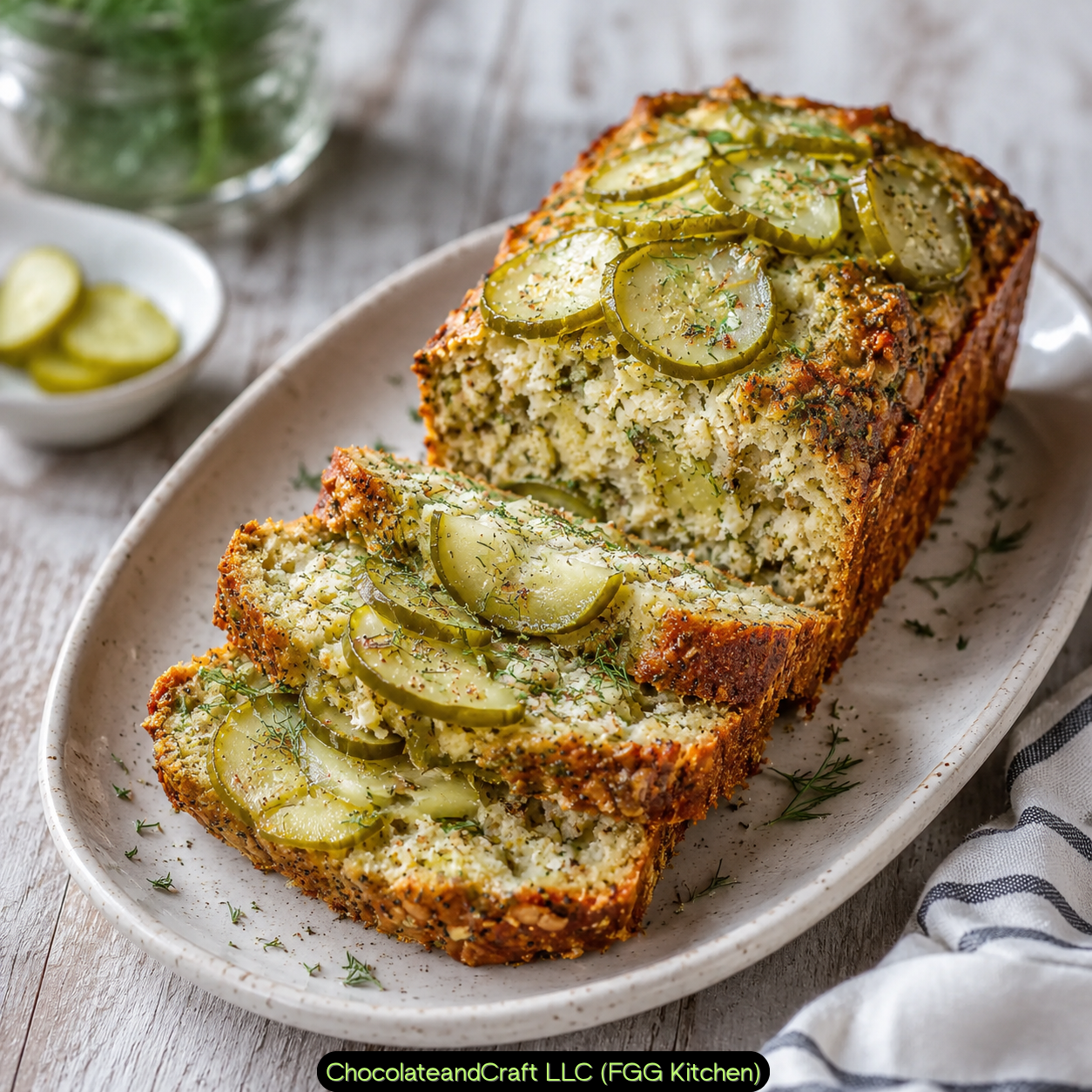
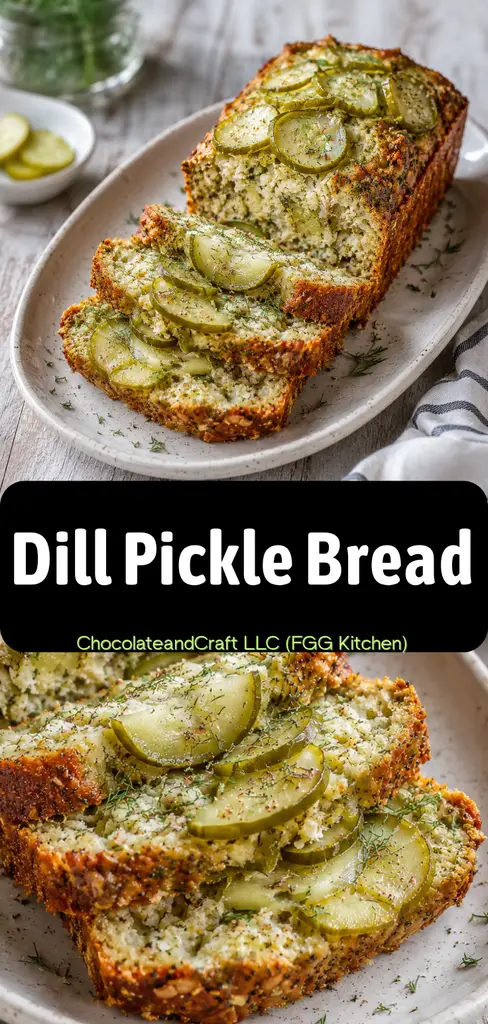
Dill Pickle Bread is a savory quick bread filled with tangy pickle flavor, melted cheese, dill, and a soft, hearty crumb that makes every slice stand out. It is the kind of loaf that feels familiar because it is homemade, but surprising because the bold dill pickle flavor gives it a personality all its own.
This bread is perfect for anyone who loves savory baking. Instead of leaning sweet, it brings together all-purpose flour, baking powder, baking soda, salt, dill, cheese, dill pickle juice, chopped dill pickles, eggs, and melted butter or oil for a loaf that is moist, flavorful, and deeply satisfying.
The pickle juice does more than add tang. It gives the bread moisture and helps carry that unmistakable dill pickle taste through the entire loaf.
The cheese makes the bread rich and comforting. Cheddar or mozzarella can be used, and mixing cheeses is a wonderful way to create a more layered flavor.
Dill Pickle Bread is especially good warm from the oven, lightly toasted, or served beside soup. It can also become a snack, lunchbox addition, party side, or flavorful base for sandwiches.
Contents
- A Savory Pickle Bread With Cheese and Comfort
- Why You’ll Love This Recipe
- A Warm Kitchen Memory in Every Slice
- Recipe Details
- Ingredients
- Equipment
- Directions
- Step 1: Preheat the Oven
- Step 2: Prepare the Loaf Pan
- Step 3: Gather the Ingredients
- Step 4: Drain the Chopped Pickles
- Step 5: Mix the Flour and Leavening
- Step 6: Add the Salt and Dill
- Step 7: Add Optional Garlic Powder
- Step 8: Add the Shredded Cheese
- Step 9: Prepare the Wet Ingredients
- Step 10: Combine Wet and Dry Mixtures
- Step 11: Watch the Batter Texture
- Step 12: Fold in the Chopped Pickles
- Step 13: Add Optional Flavor Mix-Ins
- Step 14: Transfer Batter to the Pan
- Step 15: Add Optional Cheese Topping
- Step 16: Bake the Loaf
- Step 17: Check for Doneness
- Step 18: Cool Slightly in the Pan
- Step 19: Transfer to a Wire Rack
- Step 20: Slice the Bread
- Step 21: Serve Warm
- Step 22: Toast if Desired
- Step 23: Cool Completely Before Freezing
- Tips for Success
- Variations to Try
- Serving Suggestions
- Make-Ahead Instructions
- Storage Instructions
- Freezing Instructions
- Reheating Instructions
- Frequently Asked Questions
- Final Thoughts
- Dill Pickle Bread
A Savory Pickle Bread With Cheese and Comfort
Dill Pickle Bread is a simple loaf with a bold flavor twist. It takes the cozy structure of homemade bread and fills it with tangy pickle juice, chopped dill pickles, dried or fresh dill, and shredded cheese.
The loaf begins with a dry mixture of flour, baking powder, baking soda, salt, dill, and optional garlic powder. These ingredients create the structure and flavor foundation.
Cheese is stirred into the dry mixture before the wet ingredients are added. Coating the cheese lightly with flour helps it distribute throughout the loaf instead of clumping in one place.
The wet mixture includes eggs, dill pickle juice, and melted butter or oil. Together, they create moisture, richness, and a tangy flavor that makes the bread unique.
Chopped dill pickles are folded in at the end. They add bursts of flavor and a little texture throughout the loaf.
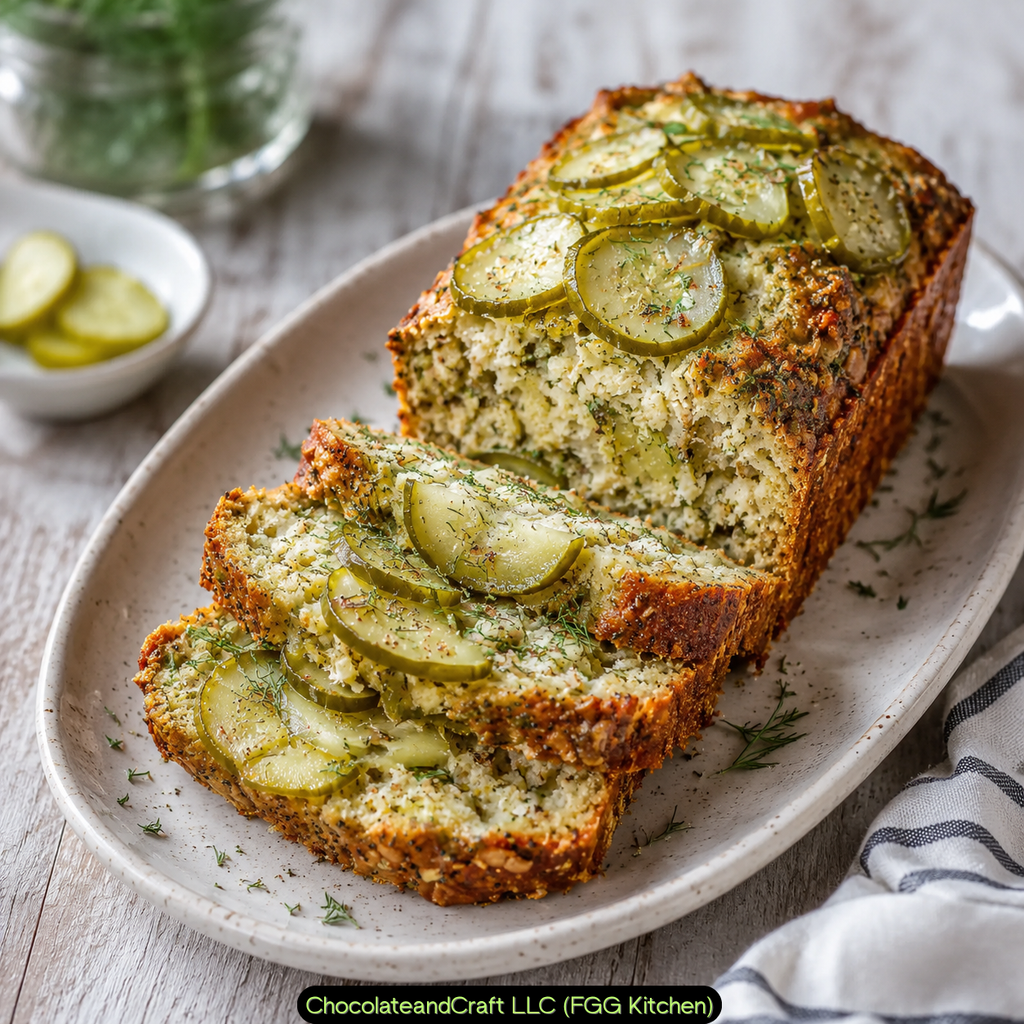
Once baked, the bread has a golden crust and a soft interior dotted with cheese and pickles. It is savory, tangy, and comforting in a way that makes it memorable from the first slice.
Why You’ll Love This Recipe
You will love Dill Pickle Bread because it is different from ordinary quick bread. The dill pickle juice, chopped pickles, dill, and cheese create a bold savory flavor in every bite.
The texture is soft and slightly chewy, with little pockets of cheese and pickle throughout. It feels hearty enough to serve with lunch but flavorful enough to enjoy on its own.
It is also easy to make. There is no complicated shaping or long waiting time, just mixing, folding, pouring into a loaf pan, and baking.
The bread pairs beautifully with soups and salads. It can turn a simple bowl of potato soup or tomato bisque into a more comforting meal.
It is flexible, too. You can try sharp cheddar, mozzarella, mixed cheeses, fresh dill, jalapeños, sun-dried tomatoes, feta, green onions, or even bread and butter pickles for a sweeter variation.
This loaf is also practical for gatherings. Slice it thick, serve it warm, toast it lightly, or use it as a conversation-starting party side.
A Warm Kitchen Memory in Every Slice
There is something special about a savory loaf baking in the oven. The smell feels deeper and cozier than a sweet cake, especially when dill, cheese, and pickle tang begin to fill the kitchen.
Dill Pickle Bread carries the feeling of family tables and shared bowls of soup. It has the warmth of homemade bread, but the pickle flavor gives it a playful spark.
The first slice is always the reveal. A golden crust opens to a soft interior marked with bits of pickle and melted cheese.
The flavor is bright but comforting. The dill pickle juice gives a tangy lift, while the cheese adds richness and the butter or oil rounds out the crumb.
This is the kind of bread that invites conversation. People notice the flavor, ask what makes it so unique, and reach for another slice because it is savory, bold, and unexpectedly satisfying.
It belongs with simple meals and good company. Whether served beside soup, packed as a snack, or shared at a party, it turns a humble loaf into something memorable.
Recipe Details
This Dill Pickle Bread bakes at 350°F (175°C). A loaf pan should be greased lightly or lined with parchment paper before the batter is added.
The dry ingredients include 2 cups all-purpose flour, 1 tablespoon baking powder, 1/2 teaspoon baking soda, 1/2 teaspoon salt, dried dill or fresh dill, and optional garlic powder. These are whisked together first so the leavening and seasonings are evenly distributed.
The bread uses 1 cup of shredded cheddar or mozzarella cheese, about 120 grams. You may also mix cheeses for a unique flavor.
The wet ingredients are 2 large eggs, 3/4 cup dill pickle juice, and 1/4 cup melted butter or oil. They are whisked separately before being added to the dry ingredients.
The chopped dill pickles should be well drained. This keeps the batter flavorful without adding too much extra moisture.
The loaf bakes for 45–55 minutes. It is ready when a toothpick inserted into the center comes out clean.
After baking, the bread should cool slightly in the pan before being transferred to a wire rack. Letting it cool helps the texture set and makes slicing easier.
Ingredients
For the Dry Ingredients
- 2 cups all-purpose flour, about 240 grams, essential for the perfect loaf
- 1 tablespoon baking powder, a crucial leavening agent that ensures your bread rises beautifully
- 1/2 teaspoon baking soda, enhancing the bread’s texture and flavor profile
- 1/2 teaspoon salt, which balances the flavors and enhances the overall taste
- 1 teaspoon dried dill, or 1 tablespoon fresh dill, chopped
- 1/2 teaspoon garlic powder, optional, for those who enjoy a hint of garlic in their bread
For the Cheese and Pickle Flavor
- 1 cup shredded cheddar or mozzarella cheese, about 120 grams
- 3/4 cup dill pickle juice, about 180 ml
- 1/2 cup chopped dill pickles, well drained
For the Wet Ingredients
- 2 large eggs, binding the ingredients together and contributing to the bread’s moistness
- 1/4 cup melted butter or oil, about 60 ml
Substitutions Mentioned
- Whole wheat flour may be used instead of all-purpose flour, or half of the all-purpose flour may be substituted with whole wheat flour.
- Fresh dill may be used instead of dried dill.
- Cheddar, mozzarella, sharp cheddar, creamy mozzarella, or mixed cheeses may be used.
- Plant-based butter or oil may be used for a vegan-friendly version.
- Eggs may be substituted with flaxseed meal mixed with water for a vegan-friendly version.
Optional Additions and Serving Ideas
- Chopped jalapeños may be added for a spicy kick.
- Sun-dried tomatoes may be added for color and flavor.
- Bread and butter pickles may be used for a sweeter version.
- Crumbled feta cheese may be added for a Mediterranean twist.
- Extra cheese may be sprinkled on top before baking.
- Chopped green onions may be added for another layer of flavor.
- Butter may be spread on warm slices.
- Tangy cream cheese may be served with the bread.
- The bread may be served with creamy soup, potato soup, tomato bisque, salads, or used as a base for sandwiches.
Equipment
Loaf Pan
Use a loaf pan for baking this bread. Grease it lightly or line it with parchment paper so the loaf releases cleanly.
Mixing Bowls
Use one large bowl for the dry ingredients and another bowl for the wet ingredients. Mixing them separately helps prevent overworking the batter.
Whisk
A whisk helps distribute the baking powder, baking soda, salt, dill, and garlic powder evenly. It is also useful for blending the eggs, pickle juice, and melted butter or oil.
Spatula
A spatula is helpful for folding the batter and adding the chopped pickles gently. It also helps smooth the top before baking.
Wire Rack
A wire rack helps the bread cool after baking. Cooling allows the texture to set before slicing.
Toothpick
Use a toothpick to check for doneness. If it comes out clean from the center of the loaf, the bread is ready.
Directions
Step 1: Preheat the Oven
Preheat your oven to 350°F (175°C). This temperature gives the loaf time to rise, bake through, and form a golden crust.
Let the oven fully heat before the bread goes in. A steady oven temperature helps the loaf bake evenly from edge to center.
Step 2: Prepare the Loaf Pan
Lightly grease your loaf pan or line it with parchment paper. This prevents sticking and makes the bread easier to remove after baking.
Parchment paper can be especially helpful if you want a clean lift from the pan. Greasing also helps the crust release smoothly.
Step 3: Gather the Ingredients
Set out the flour, baking powder, baking soda, salt, dill, cheese, pickle juice, chopped pickles, eggs, and melted butter or oil. Having everything ready makes the mixing process easier.
This is a quick bread, so the batter comes together fast once you begin. Preparing first helps you mix gently and avoid overworking the loaf.
Step 4: Drain the Chopped Pickles
Make sure the chopped dill pickles are well drained. Extra liquid can make the batter too wet and affect the final texture.
The pickles should bring flavor and small bursts of crunch. Draining them well keeps the loaf moist without making it heavy.
Step 5: Mix the Flour and Leavening
In a large mixing bowl, add the all-purpose flour, baking powder, and baking soda. Whisk them together until evenly combined.
This step helps the bread rise properly. Evenly distributed leavening keeps the loaf from baking with uneven pockets.
Step 6: Add the Salt and Dill
Add the salt and dried dill to the dry ingredients. If using fresh dill, use chopped fresh dill instead.
The dill gives the bread its signature herbal flavor. It supports the tang of the pickle juice and makes the loaf smell savory as it bakes.
Step 7: Add Optional Garlic Powder
If using garlic powder, add it to the dry mixture. Whisk again so the flavor spreads evenly.
The garlic powder is optional, but it gives the bread a deeper savory note. It works especially well with cheese and dill pickles.
Step 8: Add the Shredded Cheese
Stir the shredded cheddar or mozzarella cheese into the dry mixture. Make sure the cheese is coated lightly with the flour.
This helps the cheese stay distributed throughout the loaf. It also creates pockets of creamy richness in every slice.
Step 9: Prepare the Wet Ingredients
In a separate bowl, add the eggs, dill pickle juice, and melted butter or oil. Whisk until the mixture is smooth and well combined.
The pickle juice gives the bread its tang and moisture. The eggs help bind the loaf, while the butter or oil enriches the texture.
Step 10: Combine Wet and Dry Mixtures
Pour the wet mixture into the bowl of dry ingredients. Use a spatula to gently mix everything together.
Mix only until the batter is just combined. Overmixing can make the loaf dense, and this bread should stay soft and tender.
Step 11: Watch the Batter Texture
The batter may look thick and slightly rustic. A few lumps are okay.
Do not try to make the batter perfectly smooth. Gentle mixing protects the texture and helps the bread bake lighter.
Step 12: Fold in the Chopped Pickles
Add the well-drained chopped dill pickles to the batter. Fold them in carefully with a spatula.
The pickles add bursts of tangy flavor throughout the loaf. Fold only enough to distribute them evenly.
Step 13: Add Optional Flavor Mix-Ins
If desired, fold in chopped jalapeños, sun-dried tomatoes, crumbled feta, or chopped green onions. These optional additions can change the flavor and make the loaf more personalized.
Keep the folding gentle. The goal is to include the additions without flattening or overworking the batter.
Step 14: Transfer Batter to the Pan
Pour the batter into the prepared loaf pan. Use a spatula to scrape the bowl and spread the batter evenly.
An even layer helps the loaf bake consistently. Smooth the top so it rises into a neat shape.
Step 15: Add Optional Cheese Topping
For an extra cheesy bread, sprinkle some cheese on top before baking. This creates a delicious crust as the loaf bakes.
Use this topping if you want a more golden, cheesy surface. It also makes the loaf look especially inviting.
Step 16: Bake the Loaf
Place the loaf pan in the preheated oven. Bake for 45–55 minutes.
The bread should rise and develop a golden crust. The kitchen will smell tangy, savory, cheesy, and warm.
Step 17: Check for Doneness
Insert a toothpick into the center of the loaf. If it comes out clean, the bread is ready.
If the toothpick has wet batter on it, continue baking a little longer. Check again until the center is fully baked.
Step 18: Cool Slightly in the Pan
Remove the loaf from the oven and let it cool slightly in the pan. This helps the structure settle before removing.
The bread will be delicate when very hot. A short rest protects the loaf from breaking apart.
Step 19: Transfer to a Wire Rack
Carefully remove the bread from the pan and place it on a wire rack. Let it continue cooling so the crumb sets.
Cooling on a rack prevents the bottom from becoming too steamy. It also makes slicing easier.
Step 20: Slice the Bread
Once the bread has cooled slightly, slice it into thick, hearty pieces. Use a sharp knife for clean slices.
The inside should be soft and dotted with pickles and cheese. Each slice should smell savory and tangy.
Step 21: Serve Warm
Serve the bread warm if you want the softest, most comforting texture. A smear of butter can make each slice even richer.
Warm slices are especially good beside soup. The bread feels hearty, savory, and perfect for dipping or enjoying on the side.
Step 22: Toast if Desired
You can also toast slices lightly to enhance their flavor. Toasting brings back warmth and gives the edges a little extra texture.
This is a great way to enjoy leftover slices. The cheese and pickle flavor become even more noticeable when warmed.
Step 23: Cool Completely Before Freezing
If you plan to freeze the bread, let it cool completely first. This helps retain its texture and flavor.
Freezing warm bread can trap moisture and affect the crumb. Complete cooling gives the loaf the best chance of storing well.
Tips for Success
Always preheat the oven before baking. This helps the loaf rise evenly and develop a good crust.
Do not overmix the batter. A few lumps are fine and will help keep the texture light.
Drain the chopped pickles well. Too much extra liquid can make the bread heavy or wet.
Let the bread cool slightly before slicing. This helps maintain its structure.
Use fresh dill if available for a stronger, fresher flavor. Dried dill also works well and keeps the recipe simple.
Try different cheeses for varied flavor. Sharp cheddar, mozzarella, or a blend can all make the loaf taste different.
Use a toothpick to check doneness. A clean toothpick means the center is baked.
Adjust the amount of pickle juice based on your taste preference. More pickle juice will give a stronger flavor, though the balance of the loaf should still be maintained.
Variations to Try
Use whole wheat flour for added fiber. You can also substitute half of the all-purpose flour with whole wheat flour for added nutrition.
Add chopped jalapeños for a spicy kick. The heat works well with the dill flavor.
Incorporate sun-dried tomatoes for extra color and flavor. They give the bread a more savory twist.
Use bread and butter pickles for a sweeter version. This changes the pickle flavor while keeping the loaf unique.
Add crumbled feta cheese for a Mediterranean twist. It brings a tangy, salty note to the bread.
Mix cheeses for a more complex flavor. Cheddar and mozzarella together create both sharpness and creamy melt.
Sprinkle extra cheese on top before baking for a cheesy crust. This makes the loaf richer and more visually appealing.
Add chopped green onions for extra flavor. They bring a fresh savory note that pairs well with dill and cheese.
Make the recipe vegan-friendly by using flaxseed meal mixed with water in place of eggs. Use plant-based butter or oil as the fat.
Serving Suggestions
Dill Pickle Bread is best served warm from the oven or lightly toasted. The flavor becomes especially inviting when the cheese is soft and the dill aroma is fresh.
Serve it with a smear of butter for a simple snack. The butter melts into the warm crumb and adds richness.
Pair it with creamy soup for a comforting meal. Potato soup or tomato bisque are especially nice options mentioned for serving.
This bread also works well with salads. Its tangy flavor makes a simple lunch feel more interesting.
Serve it with tangy cream cheese for a richer snack. The cream cheese adds coolness and makes the bread feel even more savory.
Use the slices as a base for sandwiches. The pickle and cheese flavor can make a simple sandwich taste more unique.
Dill Pickle Bread is also a great party side. Slice it thick or into smaller pieces and let guests enjoy its bold flavor with other savory foods.
Pack it into lunchboxes for a flavorful change from ordinary bread. It is sturdy, interesting, and easy to enjoy as a snack or side.
Make-Ahead Instructions
Dill Pickle Bread can be baked ahead and served later. Let the loaf cool completely before storing it.
If serving for a gathering, you can bake the loaf earlier in the day and slice it when ready. Warm or toast the slices lightly if you want to refresh the texture.
Storage Instructions
Store leftover Dill Pickle Bread in an airtight container at room temperature. It will keep for up to three days.
Make sure the bread is cooled before storing. This helps protect the texture and prevents trapped steam from softening the crust too much.
Freezing Instructions
For longer storage, wrap the bread tightly in plastic wrap and freeze it. It can be frozen for up to three months.
Let the bread cool completely before freezing. This helps retain its texture and flavor.
Reheating Instructions
Warm slices gently before serving if desired. Toasting lightly is a good way to bring back texture and deepen the savory flavor.
You can serve reheated slices with butter, cream cheese, soup, or salad. The bread remains flavorful and versatile.
Frequently Asked Questions
Can I use fresh dill instead of dried?
Yes, fresh dill can be used instead of dried dill. The recipe lists 1 tablespoon chopped fresh dill as the fresh option.
Fresh herbs tend to have a milder flavor. You may adjust the amount to suit your taste.
How should I store leftover Dill Pickle Bread?
Store leftover bread in an airtight container at room temperature. It will keep for up to three days.
For longer storage, wrap it tightly in plastic wrap and freeze it. It can be frozen for up to three months.
Can I make this recipe vegan?
Absolutely. You can substitute the eggs with flaxseed meal mixed with water.
Use plant-based butter or oil to make the recipe vegan-friendly. Keep the rest of the ingredient choices aligned with that version.
Final Thoughts
Dill Pickle Bread is a savory, tangy, cheesy loaf that brings bold flavor to the table without a complicated process. All-purpose flour, dill pickle juice, chopped pickles, shredded cheese, dill, eggs, and melted butter or oil come together in a quick bread that feels comforting and unique.
It is perfect beside soup, packed into lunchboxes, sliced for snacks, served at parties, or used as a flavorful sandwich base. The pickle flavor makes it stand out, while the cheese and soft crumb keep it warm and familiar.
Serve it warm, toasted, buttered, or with cream cheese, and let the dill pickle flavor shine. Every slice carries a little tang, a little richness, and the kind of homemade character that makes savory baking feel exciting.
Dill Pickle Bread
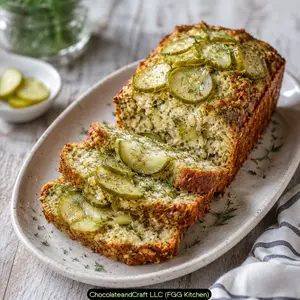
This Dill Pickle Bread is soft, savory, cheesy, and packed with tangy dill pickle flavor. Pickle juice, chopped dill pickles, dill, and shredded cheddar or mozzarella cheese give each slice a bold, comforting bite that works well as a snack, side, or fun bread for sharing.
Recipe Details
- Prep Time: 15 minutes mins
- Cook Time: 30 minutes mins
- Total Time: 45 minutes mins
- Servings: 4 servings
Ingredients
- 2 cups all-purpose flour about 240 grams
- 1 tbsp baking powder
- ½ tsp baking soda
- ½ tsp salt
- 1 tsp dried dill or 1 tbsp fresh dill, chopped
- ½ tsp garlic powder optional
- 1 cup shredded cheddar or mozzarella cheese
- ¾ cup dill pickle juice about 180 ml
- ½ cup chopped dill pickles
- 2 l arge eggs
- ¼ cup melted butter or oil about 60 ml
Instructions
Step 1: Prepare the Oven and Loaf Pan
Preheat your oven to 350°F (175°C). Have your loaf pan ready so the batter can go in as soon as it is mixed.
Step 2: Mix the Dry Ingredients
In a large mixing bowl, whisk together the all-purpose flour, baking powder, baking soda, salt, dried dill or fresh dill, and garlic powder if using. Mixing these dry ingredients first helps distribute the leavening and seasonings evenly through the bread.
Step 3: Combine the Wet Ingredients
In a separate bowl, whisk together the eggs, dill pickle juice, and melted butter or oil until smooth and well combined. The pickle juice adds moisture and gives the bread its tangy flavor.
Step 4: Make the Batter
Pour the wet mixture into the dry ingredients. Stir gently until the batter just comes together, keeping a few small lumps if needed so the bread stays light.
Step 5: Fold in the Pickles and Cheese
Fold in the chopped dill pickles and shredded cheddar or mozzarella cheese. Mix carefully so the pickles and cheese are evenly distributed without overworking the batter.
Step 6: Fill the Loaf Pan
Pour the batter into the prepared loaf pan. Smooth the top with a spatula so the bread bakes with an even surface.
Step 7: Bake the Bread
Bake for 30 minutes, or until the bread is baked through and the top looks set. Let the bread cool slightly before slicing.
Step 8: Slice and Serve
Slice the Dill Pickle Bread into thick, hearty pieces. Serve once slightly cooled so the soft interior, pickle pieces, and melted cheese are easy to enjoy.
Notes
- Always preheat your oven to ensure even baking and the best rise.
- Don’t overmix the batter; a few lumps are okay for a light, fluffy texture.
Serving Suggestions
- Serve Dill Pickle Bread warm as a savory snack or side dish.
- Pair slices with soup, salad, grilled sandwiches, or casual dinner plates.
- Serve with cream cheese, butter, or a simple savory spread if desired.
- Add it to party boards, lunch plates, or potluck tables for a tangy bread option.
Storage
How to Store
Let the bread cool completely before storing. Wrap it well or place slices in an airtight container so the bread stays soft and protected.
How to Refrigerate
Refrigerate leftovers because the bread contains cheese and chopped dill pickles. Keep it covered so it does not dry out.
How to Reheat
Warm slices gently before serving if you prefer a softer texture and melted cheese. Avoid overheating so the bread stays tender.
Best Texture Tip
Do not overmix once the wet and dry ingredients come together. A few lumps are okay and help keep the finished bread light, soft, and fluffy.

Through comforting meals, homemade sweets, and simple kitchen inspiration, I hope to help you create recipes that feel meaningful beyond the plate.