
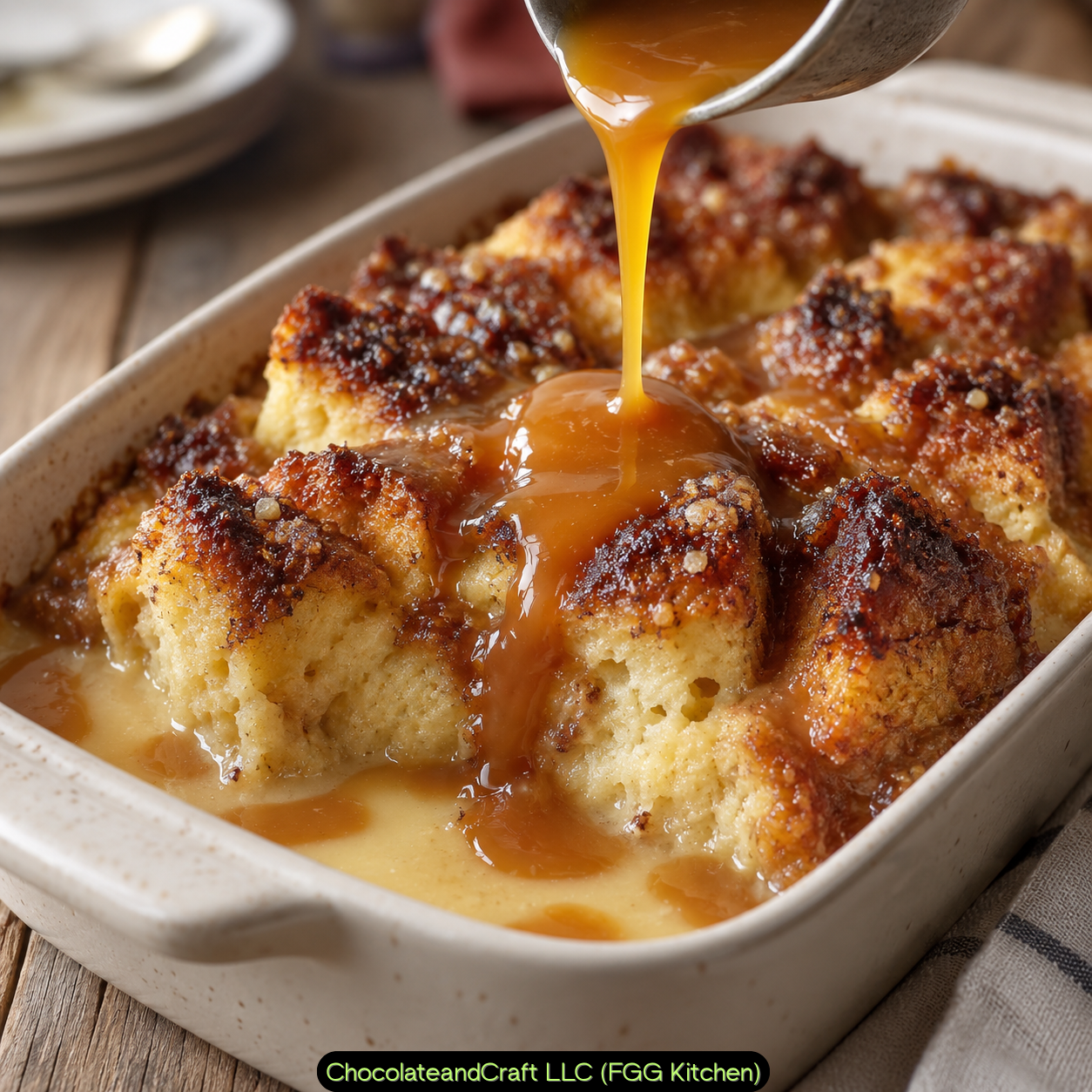
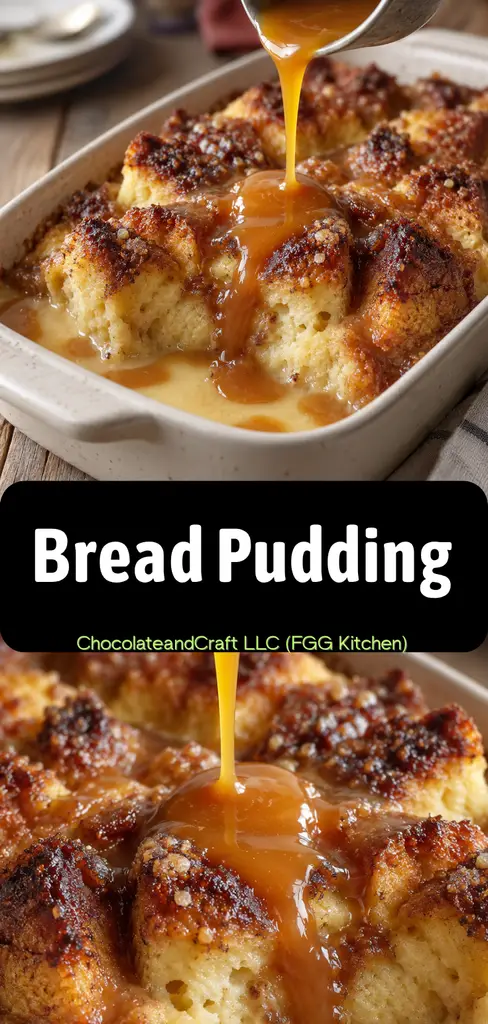
Bread Pudding is a timeless baked dessert made with cubed bread soaked in a warm custard mixture of melted butter, eggs, milk, sugar, cinnamon, nutmeg, and vanilla. Once baked until golden and softly set, it is served with a rich cream sauce that makes every bite feel sweet, cozy, and deeply comforting.
This is the kind of dessert that feels like it belongs in a family kitchen. It takes simple bread and turns it into something tender, fragrant, and full of old-fashioned charm.
The bread soaks up the custard before baking, which gives the finished pudding its soft, rich texture. The top becomes lightly golden and slightly puffed, while the inside stays moist, creamy, and gently spiced.
The sauce is made with butter, sugar, brown sugar, cream, and vanilla. It simmers into a luscious drizzle that turns each square of warm bread pudding into a dessert worth lingering over.
Contents
- A Classic Dessert Made From Simple Comfort
- Why You’ll Love This Recipe
- A Warm Kitchen Memory in Every Spoonful
- Recipe Details
- Ingredients
- Equipment
- Directions
- Step 1: Preheat the Oven
- Step 2: Butter the Baking Dish
- Step 3: Prepare the Bread Cubes
- Step 4: Whisk the Custard Base
- Step 5: Pour the Custard Over the Bread
- Step 6: Let the Bread Soak
- Step 7: Add Optional Mix-Ins
- Step 8: Bake the Bread Pudding
- Step 9: Check for Doneness
- Step 10: Let the Pudding Rest
- Step 11: Begin the Sauce
- Step 12: Simmer the Sauce
- Step 13: Add the Vanilla to the Sauce
- Step 14: Slice and Drizzle
- Step 15: Serve With Optional Toppings
- Tips for Success
- Variations to Try
- Serving Suggestions
- Make-Ahead Instructions
- Storage Instructions
- Reheating Instructions
- Frequently Asked Questions
- Final Thoughts
- Bread Pudding
A Classic Dessert Made From Simple Comfort
Bread Pudding has a special way of making humble ingredients feel meaningful. A few cups of cubed bread, a bowl of custard, and a warm oven come together to create a dessert that feels generous and familiar.
The custard is the heart of the recipe. Melted butter adds richness, eggs give structure, milk brings creaminess, sugar sweetens the mixture, and cinnamon, nutmeg, and vanilla create that warm dessert aroma.
The bread matters because it holds the custard. Day-old or stale bread works especially well because it absorbs the mixture without turning overly mushy.
As the pudding bakes, the bread softens into a creamy center while the top becomes golden. The contrast between the tender inside and slightly firmer surface makes every serving satisfying.
The sauce adds a final layer of sweetness and richness. Butter, sugar, brown sugar, cream, and vanilla melt together into a warm topping that soaks into each piece.
This dessert is simple enough for everyday baking, but it feels special enough for family gatherings. It is warm, nostalgic, and made to be shared.
Why You’ll Love This Recipe
You will love Bread Pudding because it is rich, soft, and comforting. The custard-soaked bread bakes into a dessert that feels warm from the very first spoonful.
The spices make the kitchen smell wonderful. Cinnamon and nutmeg bring that familiar cozy aroma that makes people gather before dessert is even served.
This recipe is also practical. It is a beautiful way to use leftover bread and turn it into something sweet, creamy, and memorable.
The sauce makes the dessert feel indulgent. A warm drizzle over each square adds sweetness, richness, and a creamy finish.
It is easy to customize, too. Brioche, challah, leftover rolls, almond milk, coconut sugar, coconut cream, raisins, cranberries, walnuts, pecans, chocolate chips, citrus zest, whipped cream, ice cream, half-and-half, sea salt, cardamom, and allspice can all create different versions.
Most of all, Bread Pudding feels like tradition. It is the kind of dessert that brings people back to the table for one more bite, one more story, and one more warm serving.
A Warm Kitchen Memory in Every Spoonful
There is something unforgettable about walking into a kitchen filled with cinnamon, vanilla, and butter. The smell settles around you before you even know what is baking.
Bread Pudding carries that feeling beautifully. It begins with ordinary bread, but once the custard is poured over it, the whole dish starts to feel like something made with care.
The memory of this dessert often begins before the first bite. It is in the soft clinking of measuring cups, the whisk moving through the bowl, and the sight of bread cubes slowly soaking up sweetness.
As it bakes, the pudding rises gently and turns golden on top. The kitchen fills with the kind of scent that makes everyone ask when dessert will be ready.
The first bite is soft, creamy, and warmly spiced. The bread melts into the custard, while the sauce adds a sweet, rich finish that makes the whole dish feel complete.
This is more than a dessert for using up bread. It is a reminder that simple food can hold family stories, quiet afternoons, and the comfort of being gathered together.
Recipe Details
Bread Pudding is baked in a 9×13-inch baking dish at 350°F, about 175°C. The baking dish is buttered before the bread and custard are added.
The custard mixture includes 1/2 cup melted butter, 4 large eggs, 2 cups milk, 3/4 cup sugar, cinnamon, nutmeg, and vanilla. The melted butter should be warm but not hot so it does not affect the eggs.
The recipe uses 8 cups of cubed bread, about 400 grams. Day-old bread gives the best texture because it absorbs the custard well.
Brioche, challah, or leftover rolls can be used for a richer flavor and texture. These bread options help make the pudding feel extra tender and satisfying.
The bread should soak in the custard for about 30 minutes before baking. This gives each cube time to absorb the mixture and become flavorful all the way through.
The pudding bakes for approximately 40 minutes. It is done when the top is golden brown, slightly puffed, and a knife inserted into the center comes out clean.
The sauce is prepared while the pudding bakes. Butter, sugar, brown sugar, and cream simmer together, then vanilla is stirred in after the sauce thickens.
Ingredients
For the Bread Pudding
- Butter, for greasing the dish
- 1/2 cup melted butter, about 113 grams
- 4 large eggs
- 2 cups milk, about 480 milliliters
- 3/4 cup sugar, about 150 grams
- 1 teaspoon cinnamon
- 1/2 teaspoon nutmeg
- 1 teaspoon vanilla
- 8 cups cubed bread, about 400 grams
For the Sauce
- 1/4 cup butter, for the sauce
- 1/2 cup sugar, for the sauce
- 1/4 cup brown sugar, about 50 grams
- 1 cup cream, about 240 milliliters
- 1 teaspoon vanilla, for the sauce
Optional Swaps and Additions Mentioned
- Almond milk may be used instead of milk for a dairy-free option.
- Coconut sugar may be used instead of sugar.
- Day-old or stale bread gives the best texture.
- Brioche or challah may be used for a richer bread pudding.
- Leftover rolls may also be used.
- Coconut cream may be used instead of cream for a dairy-free sauce option.
- Raisins or cranberries may be added for extra sweetness and texture.
- Walnuts or pecans may be added for crunch.
- Chocolate chips may be mixed in before baking.
- Orange zest or lemon zest may be added to the custard.
- Whipped cream or vanilla ice cream may be served on top.
- Half-and-half may be used instead of milk for a richer custard.
- A pinch of sea salt may be added to the cream sauce.
- Cardamom or allspice may be added for a unique spice twist.
- A sprinkle of cinnamon may be used as garnish.
Equipment
9×13-Inch Baking Dish
A 9×13-inch baking dish gives the bread pudding enough room to bake evenly. Buttering the dish helps prevent sticking and adds flavor around the edges.
Large Mixing Bowl
A large mixing bowl is used for whisking the custard. It should be roomy enough for the melted butter, eggs, milk, sugar, spices, and vanilla to blend smoothly.
Whisk
A whisk helps combine the custard until smooth. It is especially useful for blending the eggs fully into the milk and melted butter.
Spatula
A spatula helps toss the bread cubes gently in the custard. It can also be used to press the bread lightly so the cubes soak evenly.
Saucepan
A saucepan is used to prepare the warm cream sauce. The butter, sugars, and cream need gentle heat so they can dissolve and thicken together.
Knife
A knife is used to test the center of the bread pudding. When the knife comes out clean, the pudding is fully baked.
Aluminum Foil
Aluminum foil can be used if the top browns too quickly. A loose cover allows the center to finish baking while protecting the surface.
Directions
Step 1: Preheat the Oven
Preheat your oven to 350°F, about 175°C. Starting with a properly heated oven helps the bread pudding bake evenly from the edges to the center.
While the oven warms, set out your baking dish, mixing bowl, whisk, spatula, saucepan, and ingredients. Having everything ready makes the process feel smooth and relaxed.
Step 2: Butter the Baking Dish
Generously butter a 9×13-inch baking dish. Make sure the bottom and sides are coated so the bread pudding releases more easily after baking.
This buttered layer also adds flavor to the edges of the pudding. It helps the dessert feel rich from the first scoop to the last corner piece.
Step 3: Prepare the Bread Cubes
Place the cubed bread into the prepared baking dish. Spread it out evenly so the custard can reach every piece.
Day-old or stale bread works especially well because it absorbs the custard without falling apart too quickly. Brioche, challah, or leftover rolls may be used for a richer texture.
Step 4: Whisk the Custard Base
In a large mixing bowl, combine the melted butter, eggs, milk, sugar, cinnamon, nutmeg, and vanilla. Whisk until the mixture is smooth and evenly blended.
The melted butter should be warm but not hot. If it is too hot, it can affect the eggs before the custard is properly mixed.
Step 5: Pour the Custard Over the Bread
Pour the custard mixture evenly over the cubed bread in the baking dish. Move slowly so the liquid reaches as much of the bread as possible.
Use a spatula to gently toss the bread cubes. This helps every piece become coated with the sweet, spiced custard.
Step 6: Let the Bread Soak
Let the bread and custard mixture sit for about 30 minutes. This soaking time allows the bread to absorb the flavor and moisture.
Gently press the bread down with a spatula if needed. The goal is to make sure each cube has a chance to soak without crushing the texture.
Step 7: Add Optional Mix-Ins
If desired, add raisins, cranberries, walnuts, pecans, chocolate chips, orange zest, or lemon zest before baking. Fold or scatter them gently through the soaked bread.
These additions can bring sweetness, crunch, or brightness. Keep them evenly distributed so every serving has a balanced bite.
Step 8: Bake the Bread Pudding
Place the baking dish in the preheated oven and bake for approximately 40 minutes. The top should become golden brown and slightly puffed.
As it bakes, the custard will set around the bread. The kitchen will fill with the warm aroma of cinnamon, nutmeg, vanilla, and butter.
Step 9: Check for Doneness
Insert a knife into the center of the bread pudding. If it comes out clean, the pudding is fully baked.
If the top is browning too quickly before the center is ready, loosely cover the dish with aluminum foil. Continue baking until the center is set.
Step 10: Let the Pudding Rest
Remove the bread pudding from the oven and let it rest for about 10 minutes. This helps it set and makes serving easier.
The pudding will continue to settle slightly as it cools. That short rest gives each square a better shape when cut.
Step 11: Begin the Sauce
While the bread pudding bakes or rests, prepare the sauce. In a saucepan over medium heat, combine the butter, sugar, brown sugar, and cream.
Stir frequently as the mixture warms. The sugars should dissolve into the cream, creating a smooth, sweet base.
Step 12: Simmer the Sauce
Let the sauce simmer gently until it thickens to a luxurious consistency. Keep stirring so the mixture stays smooth and does not stick.
For an extra flavor boost, a pinch of sea salt may be added to the sauce. This can enhance the sweetness and make the sauce taste fuller.
Step 13: Add the Vanilla to the Sauce
Once the sauce reaches the desired thickness, remove it from the heat. Stir in the vanilla for the final layer of flavor.
The vanilla rounds out the butter, cream, and sugars. The finished sauce should be warm, sweet, and ready to drizzle.
Step 14: Slice and Drizzle
Cut the warm bread pudding into squares. Plate each portion while it is still slightly warm.
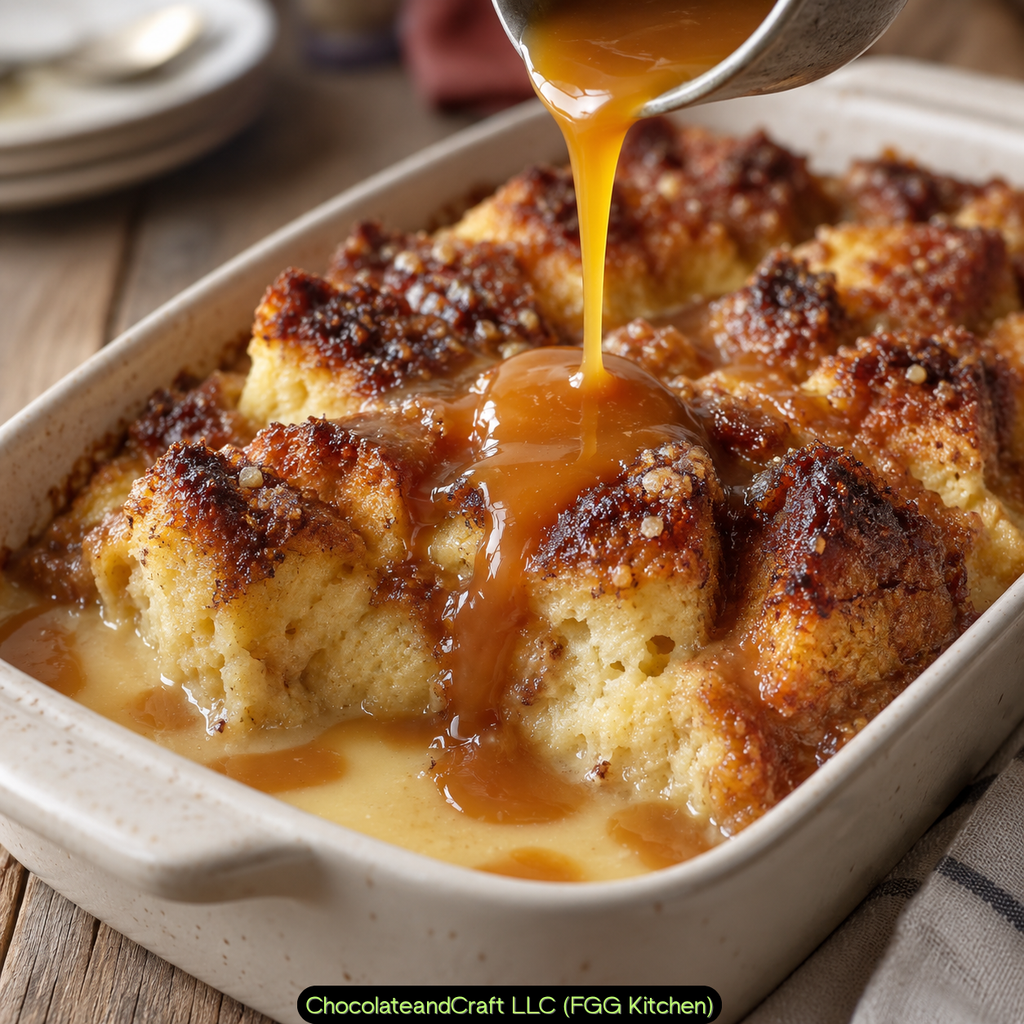
Drizzle the sauce generously over the top. Let it sink into the bread pudding so every bite becomes rich and custardy.
Step 15: Serve With Optional Toppings
Serve the bread pudding warm with a sprinkle of cinnamon, whipped cream, or vanilla ice cream if desired. A cup of warm coffee also pairs beautifully with the sweet, spiced flavor.
This dessert is best when served warm with the sauce. The contrast of soft custard, golden top, and creamy drizzle makes each serving feel complete.
Tips for Success
Use stale or day-old bread for the best texture. It absorbs the custard better and helps prevent the pudding from becoming mushy.
Do not skip the 30-minute soak. That resting time gives the bread a chance to take in the custard fully.
Whisk the custard until smooth. The eggs, milk, butter, sugar, spices, and vanilla should be evenly combined before they touch the bread.
Make sure the melted butter is not too hot when mixing the custard. Warm butter is fine, but very hot butter can affect the eggs.
Bake until the top is golden and the center is set. A knife inserted into the center should come out clean.
Let the bread pudding rest for about 10 minutes after baking. This makes cutting and serving easier.
Do not skip the sauce. It adds a rich finish that turns the warm pudding into a truly indulgent dessert.
Store leftovers in an airtight container in the refrigerator for up to three days. Reheat before enjoying for the best texture.
Variations to Try
Add raisins for a classic sweet bite. Cranberries can also bring a slightly brighter fruit flavor.
Mix in walnuts or pecans for crunch. Their texture contrasts nicely with the soft custard-soaked bread.
Add chocolate chips before baking for a richer dessert. The chocolate melts into the pudding and creates sweet pockets throughout.
Stir orange zest or lemon zest into the custard for a citrusy flavor. The zest adds brightness without changing the cozy character of the dessert.
Use brioche or challah for a richer bread pudding. Leftover rolls can also work beautifully.
Use almond milk instead of milk for a dairy-free option. Coconut cream may be used in the sauce for a dairy-free version.
Use coconut sugar instead of sugar if desired. It gives the dessert a different sweetness.
Try half-and-half instead of milk in the custard for a richer flavor. This makes the pudding even creamier.
Add a dash of cardamom or allspice for a unique spice twist. These spices create a different warmth while keeping the dessert familiar.
Top each serving with whipped cream or vanilla ice cream. Both make the warm pudding feel extra decadent.
Serving Suggestions
Serve Bread Pudding warm, cut into squares, and drizzled generously with the cream sauce. The sauce should run over the top and settle into the soft custard.
Add a sprinkle of cinnamon for a simple finish. It reinforces the warm spice flavor already baked into the pudding.
A dollop of whipped cream makes each serving feel lighter and more elegant. It adds softness beside the warm, dense pudding.
Vanilla ice cream is another delicious topping. The cold ice cream melts slightly over the warm bread pudding and makes the dessert feel even more indulgent.
Serve it with a cup of warm coffee for a cozy dessert experience. The warmth of the drink pairs beautifully with cinnamon, nutmeg, vanilla, and brown sugar.
This dessert is wonderful for family gatherings. It is easy to scoop, easy to share, and comforting enough to please a table full of people.
It also works as a traditional dessert after a simple dinner. The flavor feels familiar, but the sauce gives it a special finish.
For a beautiful presentation, plate each square with sauce and a small extra dusting of cinnamon. The dessert should look warm, soft, and inviting.
Make-Ahead Instructions
Bread Pudding can be prepared the day before and stored in the refrigerator. This makes it convenient for gatherings or busy days.
When ready to serve, reheat it gently in the oven. Warm bread pudding tastes best because the custard softens and the sauce can be drizzled over the top.
You can also prepare the sauce close to serving time. A warm sauce makes the dessert feel fresh and indulgent.
Storage Instructions
Store leftover Bread Pudding in an airtight container in the refrigerator. It will keep for up to three days.
Let the pudding cool before storing. This helps protect the texture and keeps extra moisture from collecting too quickly.
Store the sauce separately if possible. This makes reheating and serving easier.
Reheating Instructions
Reheat Bread Pudding gently before serving. The oven is a good option when you want to warm the pudding without rushing it.
Add the sauce after reheating so it stays smooth and rich. If the sauce has thickened, warm it gently until it becomes pourable again.
Serve the reheated pudding warm. A fresh drizzle of sauce, whipped cream, or vanilla ice cream can make leftovers feel special again.
Frequently Asked Questions
Can I make this recipe ahead of time?
Absolutely. You can prepare Bread Pudding the day before and store it in the refrigerator.
Reheat it gently in the oven before serving. Warm it just enough to bring back the soft custard texture.
What type of bread is best for Bread Pudding?
Stale bread is ideal because it absorbs the custard well. Day-old bread gives the pudding a better texture.
Brioche, challah, or leftover rolls can enhance the flavor and texture. They make the pudding richer and more tender.
How do I know when Bread Pudding is done baking?
The top should be golden brown and slightly puffed. The center should be set.
Insert a knife into the center. If it comes out clean, the pudding is fully cooked.
Final Thoughts
Bread Pudding is warm, nostalgic, creamy, and full of classic dessert comfort. Cubed bread, melted butter, eggs, milk, sugar, cinnamon, nutmeg, and vanilla bake into a tender pudding, while the butter, sugar, brown sugar, cream, and vanilla sauce adds a rich finishing touch.
It is the kind of dessert that proves simple ingredients can become something deeply memorable. The bread absorbs the custard, the spices fill the kitchen, and the warm sauce turns each square into a sweet, comforting serving.
Serve it with whipped cream, vanilla ice cream, cinnamon, or warm coffee, and let it bring that old-fashioned family-table feeling to the moment. Every bite is soft, sweet, and filled with the quiet comfort of a dessert made to be shared.
Bread Pudding
This Bread Pudding is warm, soft, custardy, and filled with cozy cinnamon, nutmeg, vanilla, and tender cubes of bread. A rich cream sauce made with butter, sugar, brown sugar, cream, and vanilla gives each serving a sweet finish that makes it perfect for dessert, holidays, or a comforting family treat.
Recipe Details
- Prep Time: 15 minutes mins
- Cook Time: 30 minutes mins
- Total Time: 45 minutes mins
- Servings: 4 servings
Ingredients
- Butter for greasing the dish
- 8 cups cubed bread about 400 grams
- 4 l arge eggs
- 2 cups milk about 480 milliliters
- 1/2 cup melted butter about 113 grams
- 3/4 cup sugar about 150 grams
- 1 teaspoon cinnamon
- 1/2 teaspoon nutmeg
- 1 teaspoon vanilla
- 1/4 cup butter for the sauce
- 1/2 cup sugar for the sauce
- 1/4 cup brown sugar about 50 grams
- 1 cup cream about 240 milliliters
- 1 teaspoon vanilla for the sauce
Instructions
Step 1: Prepare the Oven and Dish
Preheat your oven to 350°F (about 175°C). Grease the baking dish with butter so the bread pudding releases more easily after baking.
Step 2: Add the Bread
Place the cubed bread into the prepared baking dish. Spread the bread cubes evenly so the custard can soak through every layer.
Step 3: Make the Custard
In a large mixing bowl, combine the melted butter, eggs, milk, sugar, cinnamon, nutmeg, and vanilla. Whisk thoroughly until the mixture is smooth and evenly blended.
Step 4: Soak the Bread
Pour the custard mixture over the cubed bread in the baking dish. Gently toss the bread cubes so they are evenly coated and can absorb the custard.
Step 5: Bake the Bread Pudding
Place the dish in the preheated oven and bake for approximately 40 minutes. The top should become golden brown and slightly puffed.
Step 6: Start the Sauce
While the bread pudding is baking, prepare the sauce. In a saucepan over medium heat, combine the butter, sugar, brown sugar, and cream.
Step 7: Finish the Sauce
Stir the sauce mixture until smooth and warmed through. Add the vanilla for the sauce and mix until fully incorporated.
Step 8: Cool Slightly
Once the bread pudding has baked, remove it from the oven and let it cool slightly. This helps the custard settle before slicing.
Step 9: Slice and Serve
Cut the bread pudding into squares and plate each portion. Drizzle the warm sauce over each serving before enjoying.
Notes
- For the best texture, use stale or day-old bread; it absorbs the custard better without becoming mushy.
- Experiment with different types of bread; brioche or challah will provide a richer flavor and texture.
Serving Suggestions
- Serve Bread Pudding warm with the cream sauce spooned over the top.
- Pair it with coffee, tea, milk, or hot cocoa.
- Add it to holiday dessert tables, family dinners, or cozy weekend meals.
- Serve in squares for easy plating and a classic homemade presentation.
Storage
How to Store
Let the bread pudding cool before storing. Cover the dish tightly or transfer portions to an airtight container so the custard texture stays protected.
How to Refrigerate
Refrigerate leftovers because this dessert contains eggs, milk, cream, and butter. Keep the sauce covered separately or with the pudding until ready to serve again.
How to Reheat
Reheat gently until warmed through. Add the sauce after reheating or warm it separately so each serving stays moist and rich.
Best Texture Tip
Use stale or day-old bread for the best custard absorption. This helps the bread pudding become soft and rich without turning overly mushy.

Through comforting meals, homemade sweets, and simple kitchen inspiration, I hope to help you create recipes that feel meaningful beyond the plate.